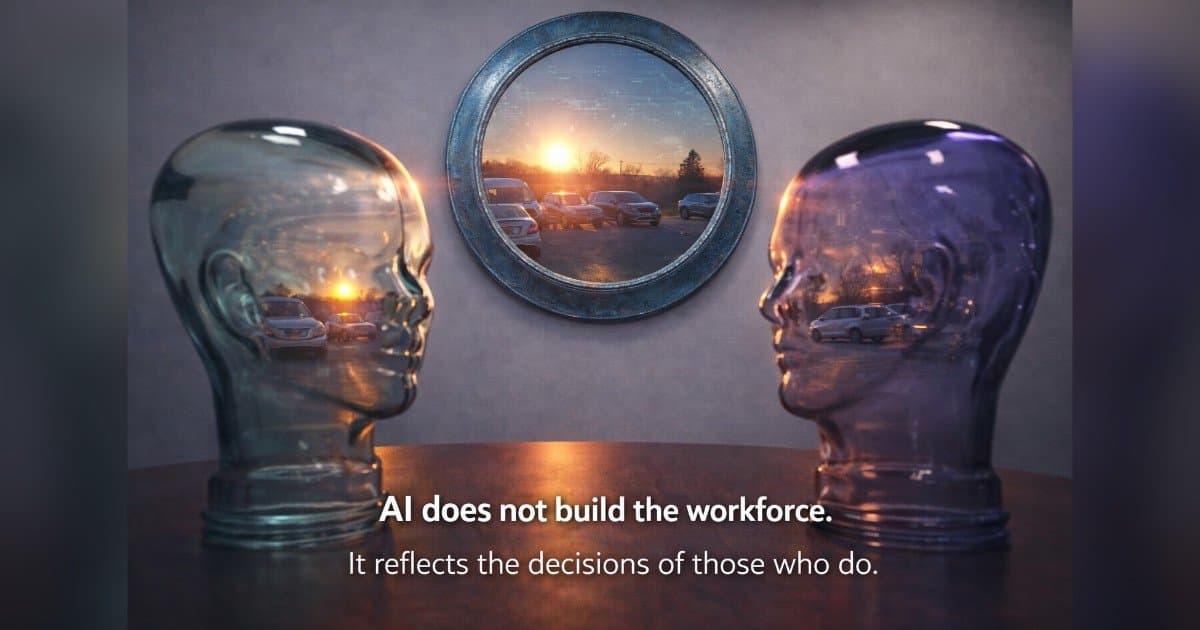
The value of artificial intelligence in industrial settings depends entirely on human cognition, contextual judgment, and domain-specific expertise, according to workforce education advocates. Rather than replacing workers, AI functions as a tool that requires human guidance to produce meaningful outcomes, highlighting the growing importance of Industrial STEM education for preparing professionals who can interpret data and apply technology effectively.
Industrial STEM represents the integration of technical knowledge with applied industrial practice, combining real-world mechanics, constraints, and problem-solving to transform theory into production. This approach differs significantly from teaching software use alone, which creates operators rather than leaders who understand how technology fits within industrial systems. The effectiveness of AI in industrial environments is directly tied to human ability to translate industrial science into usable parameters, as AI lacks understanding of welding tolerances, machining variances, maintenance behavior patterns, process flow bottlenecks, or safety culture without human guidance.
For decades, industrial progress has been built on measurement of cycle times, defects, uptime, productivity, efficiency, and quality. What has changed is not the importance of measurement but the speed and scale at which measurement now occurs through modern data systems. While predictive and preventive models allow industries to anticipate challenges before they happen, this capability introduces a new demand for interpretation that only humans can provide. Industrial professionals must translate between AI outputs and operational reality, determining whether recommendations make sense within safety regulations, production deadlines, workforce capabilities, and real-world constraints.
The narrative that AI will replace people oversimplifies the challenge, as technological advancements historically transform rather than eliminate work. In industrial sectors, AI increases demand for workers possessing technical literacy, systems thinking, applied problem-solving, interdisciplinary understanding, and context-grounded decision-making. The real risk is not AI replacing humans but failing to prepare humans to use AI effectively, making workforce development approaches critical. Educational institutions, industry leaders, and workforce development partners must decide whether to train individuals to use technology or develop thinkers who understand how technology fits inside real industrial systems.
As industrial systems become more advanced, industries that thrive will recognize that AI serves as a tool rather than the workforce itself. Human cognition remains the anchor that gives meaning to information, with progress beginning with questions, decisions, and human thought regardless of technological advancement. The future of industry will be defined by collaboration between human cognition and intelligent tools, where AI monitors equipment health while skilled professionals interpret recommendations and leaders make decisions balancing efficiency with safety and quality. This human-centered industrial intelligence depends on one factor that cannot be automated: human understanding grounded in experience, ethics, and contextual judgment.