
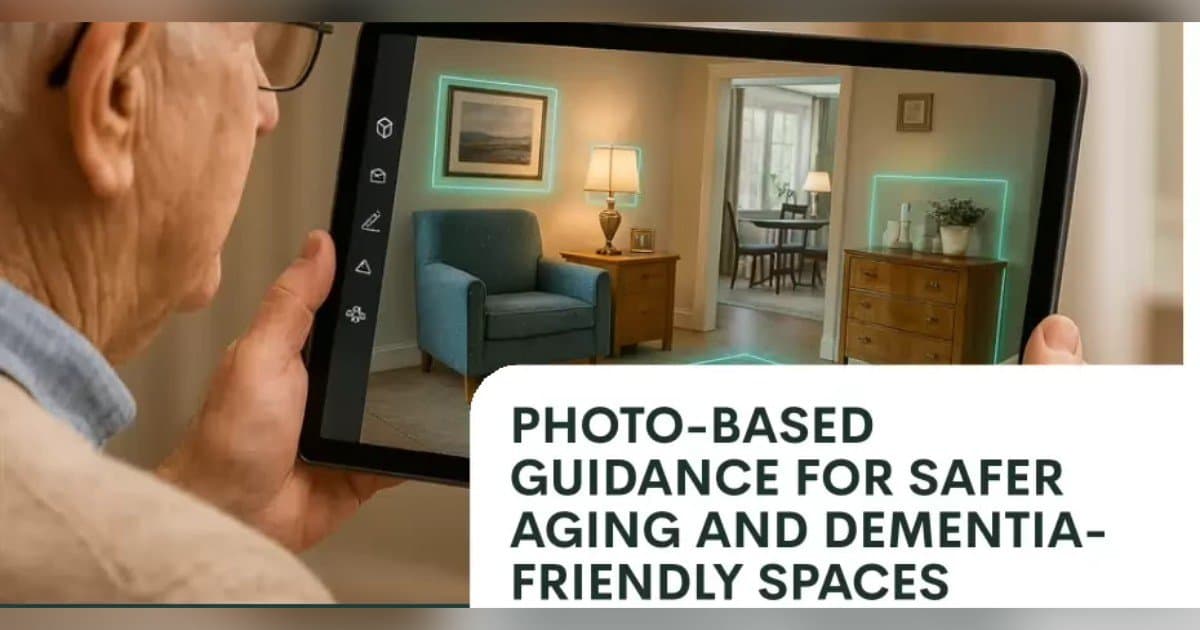
As populations age and dementia cases rise, the design of interior spaces is becoming a critical factor in supporting cognitive health. Texas State University Assistant Professor Nadim Adi is addressing this need through research, a pioneering course, and the development of NuroNest, an AI-powered tool designed to assess environments for dementia-related risks.
NuroNest, still in its early stages, analyzes images of interior spaces to flag features that may be problematic for individuals living with dementia or age-related cognitive changes. These include low contrast between furniture and floors, unclear pathways, visual clutter, and weak wayfinding cues. The tool is intended to help families, caregivers, and organizations identify potential environmental hazards that might otherwise go unnoticed.
Adi, who teaches in the Department of Interior Design within the School of Family and Consumer Sciences, emphasizes that the built environment should be part of the care equation. "If we design for physical accessibility, why should we not also design for cognitive accessibility?" he said. "Homes, clinics, senior living communities, and public spaces can unintentionally create risk when they are visually confusing, poorly lit, or hard to navigate."
The initiative is grounded in more than a decade of research in dementia-supportive design and environmental psychology. Adi and his team are currently refining the technology, gathering feedback, and exploring validation and partnerships. NuroNest is designed to complement, not replace, the work of designers, healthcare professionals, and caregivers.
Adi's academic contributions include co-authoring An Introduction to Architectural Psychopathology with Dr. Mais Aljunaidy, assistant professor of psychology at Texas State. The textbook explores how interior design can support people with mental disorders, including dementia. The pair also developed an interdisciplinary course at Texas State, offered starting fall 2025, that trains students to design spaces for individuals with conditions such as autism, dementia, depression, schizophrenia, and anxiety disorders. The course has been featured by Texas State News, Texas Public Radio, and Community Impact.
Adi's peer-reviewed research includes a systematic study on architecture and mental disorders published in HERD: Health Environments Research & Design Journal, as well as studies on using virtual reality to assess dementia-friendly hospital design. He has also spoken publicly on aging-ready environments, including a TEDx Texas State University talk, and hosts conversations through Mental Design Labs.
The development of NuroNest comes at a time when the need for cognitive accessibility is becoming more recognized. By providing a tool that can identify environmental risks, Adi aims to make dementia-supportive design more accessible to those who lack direct access to specialists. The team is actively seeking collaborators and pilot partners, including community groups, senior living providers, healthcare organizations, and technology partners, to help validate and advance the technology.
Through his research, teaching, and innovation, Adi is working to ensure that interior spaces support dignity and independence for all, regardless of cognitive ability. As he noted, the physical environment can either hinder or help, and it's time to design with cognitive health in mind.
